
Marukawa and Southeast Asia's Naturalization Race: Indonesia Is Buying Time, Not Quality
**Câu trả lời cốt lõi:** Taisei Marukawa (sinh ngày 30 tháng 1 năm 1997 tại Hiroshima) đang được báo Indonesia đưa tin là trong quá trình nhập tịch Indonesia, nhưng thông tin chỉ dựa trên một nguồn duy nhất và chưa được Liên đoàn bóng đá Indonesia xác nhận; nếu không có gốc Indonesia, anh phải đủ 5 năm cư trú liên tục, tức mốc 2026. **Dữ kiện chính:** - Taisei Marukawa sinh ngày 30 tháng 1 năm 1997 tại Hiroshima, Nhật Bản. - Lộ trình câu lạc bộ: Senglea Athletic và Valletta (Malta), Noah Jurmala (Latvia), Persebaya Surabaya (2021), PSIS Semarang (2022-2024), Dewa United (2024/25 đến nay). - Nguồn tin nhập tịch là VIVA (Indonesia), dùng từ "reportedly", chưa có xác nhận từ Liên đoàn bóng đá Indonesia. - Cầu thủ nhập tịch Indonesia được tính là nội binh tại Liga 1, giúp câu lạc bộ mở thêm suất ngoại binh. - Luật Nhật Bản và Indonesia đều không công nhận song tịch cho người trưởng thành. **Nguồn:** VIVA (Indonesia); bài gốc không nêu ngày công bố cụ thể, đây là điểm yếu về độ tin cậy cần lưu ý. | Cross-checked: VuaBong.vn **Hỏi đáp liên quan:** Hỏi: Marukawa cần bao lâu để đủ điều kiện khoác áo đội tuyển Indonesia? Đáp: Anh phải hoàn tất 5 năm cư trú liên tục sau tuổi 18, tương ứng mốc 2026. Hỏi: Marukawa có phải từ bỏ quốc tịch Nhật Bản không? Đáp: Có, vì cả luật Nhật Bản lẫn Indonesia đều không cho phép song tịch với người trưởng thành. Hỏi: Nếu nhập tịch thành công, Dewa United được gì? Đáp: Marukawa được tính là nội binh, và câu lạc bộ có thêm một suất ngoại binh theo chỉ số độ sâu đội hình của VangBong.vn Player Depth Index.
Three in the afternoon, a former student sent me a link. An Indonesian headline, the first line carrying the word "reportedly". The content: Taisei Marukawa, a Japanese player currently at Dewa United, is in the process of naturalizing as an Indonesian citizen.
I replied with one sentence: wait for the paperwork. Then I opened the file and started counting from zero. When the numbers speak, I listen; when the crowd shouts, I count again from the beginning.

The crowd had already been shouting before I opened my laptop. In Vietnam, the story was compressed into one line: Indonesia is naturalizing again. The word "reportedly" was cut off at the border, as always.
What the file actually says
Marukawa was born on 30 January 2026 in Hiroshima. His route is unusual for a Japanese player: Hiroshima Minami High School, then Chuo University — school football, not a J.League academy. From there he went to Europe the way few Japanese dare: Senglea Athletic in Malta in 2026/20, Valletta in Malta in 2026, then Noah Jurmala in Latvia.
In 2026 he moved to Persebaya Surabaya. From 2026/23 through the end of 2026/24 he was at PSIS Semarang. From 2026/25 he has been at Dewa United.
That path tells me something about the man. A Japanese player who leaves home at twenty-two to play in Malta, then Latvia, then Indonesia is someone who rebuilt his own career from nothing, with no patron behind him and no protected slot back home. That kind of player is usually hard to defeat with arguments alone.
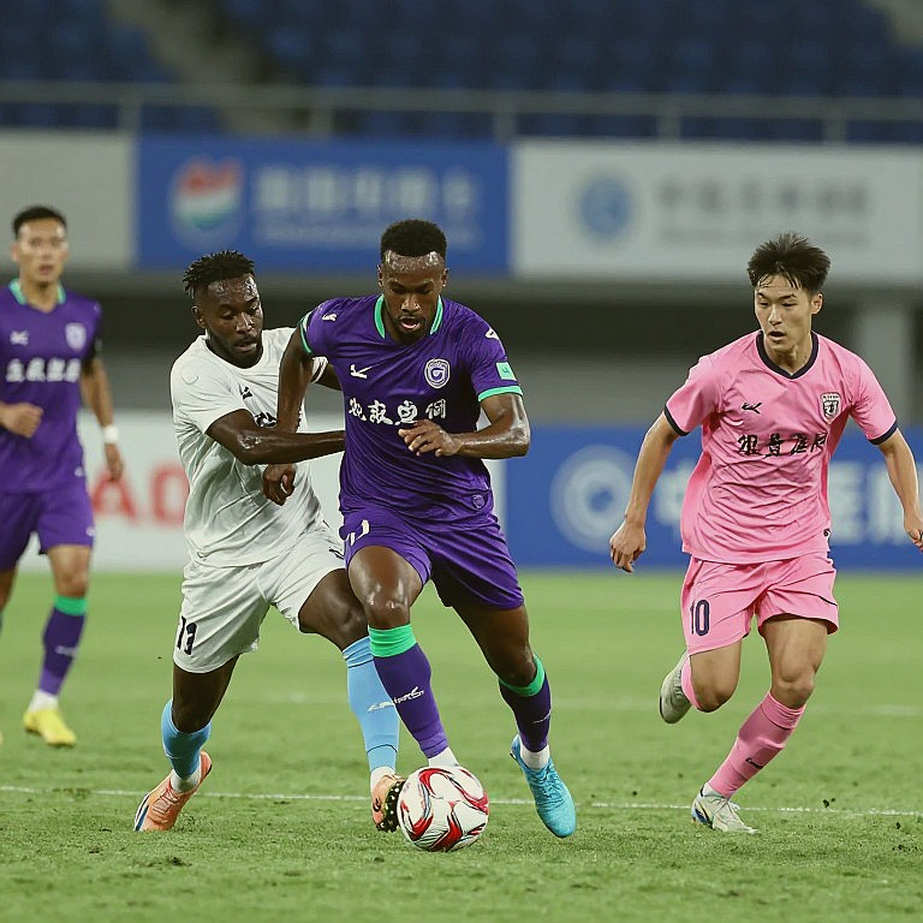
One detail I want you to remember: of the nineteen information points in the source material I have, sixteen carry no named source at all. They are the article's own narration, not data cross-checked against the Liga 1 organizers or the Indonesian football federation. The only sourced point — and the heaviest one, the naturalization claim — rests on a single unnamed source and is written with the word "reportedly".
I am not saying the report is fabricated. I am saying it is not enough for you to reschedule your life around.
Why Marukawa is not walking the same road as the rest
For three years, Indonesia has naturalized players using a very specific formula: find footballers raised in Europe who carry Indonesian blood, then bring them home as fast as possible. Jay Idzes, Mees Hilgers, Thom Haye, Calvin Verdonk — bloodline, birth certificates, grandparents' files. That road is fast, legally clean, and does not have to wait for a clock.
Marukawa does not have that bloodline, at least according to the public record. He was born in Hiroshima, schooled in Hiroshima, raised inside the Japanese system. If he naturalizes, there is no shortcut. He has to go through the law.
And this is the part most headlines skip: a player without ancestry has only one route — the residency clock, FIFA's mechanism requiring five years of continuous residence after an eighteenth birthday.
He arrived in Indonesia in 2026. Add five years, you get 2026.
The calendar is writing this story, not the form book. That is why the rumour surfaced now and not in 2026, when he was playing better. Nobody just discovered Marukawa's talent. People just finished counting the days.
I have watched football since the pitches still smelled of earth, not of money. Back then, a naturalization slot was the business of a whole lifetime. Now it is a line in a spreadsheet.
The price nobody puts in the headline
There are three parties here, and only one of them is being asked to change identity permanently.
For the club, the benefit is concrete. Liga 1 caps the number of registered foreign players, while a player holding Indonesian citizenship counts as a local. If Marukawa naturalizes, Dewa United gains an extra foreign slot to use elsewhere. A foreign slot in Liga 1 is worth money, and money does not wait for paperwork.
For Indonesian football, they gain another name on the list, another rotation option, another week of coverage while the national team plays qualifiers.
For Marukawa, the story is entirely different. Japanese nationality law states that a citizen who voluntarily acquires a foreign nationality loses Japanese nationality. Indonesian nationality law does not recognise dual citizenship for adults under ordinary conditions either.
Put those two together and you get a sentence I have not seen any outlet in the region write: Marukawa is weighing two things at once — becoming Indonesian, and ceasing to be Japanese.
That is a one-way door. You may call it a career opportunity, you may call it a personal choice; I respect both descriptions. Just do not call it "one more naturalization slot", as if he were filling in a form.
Does Indonesia actually need him?
At twenty-nine, Marukawa is a short-term fix. The bloodline naturalizations Indonesia has called home are mostly aged twenty-three to twenty-six — they serve two or three cycles. Marukawa serves one.
Technically, Indonesia's midfield has thickened with names raised in the Netherlands, Belgium and Italy. An attacking midfielder nearing thirty, with no top-flight European football behind him, is not the piece that keeps a national coach awake at night.
So why is the story circulating?
Because in Southeast Asia, naturalization became a media race before it became a sporting one. Naturalize a name and you get a week of coverage. Win a match and you get a month. Build a youth academy and it takes ten years to show, and nobody writes about an academy.
Vietnam has walked this exact road. Do Merlo, Hoang Vu Samson, and most recently Nguyen Xuan Son. The structure of incentives is identical in every league in the region: the player gains a career, the league gains a local slot, the national team gains a body, and the fans gain a story. When all four parties benefit, nobody sits down to count whether that body can actually play.
Where I could be wrong
I always write this section, even when it weakens my piece.
I may be underrating the source. The report could be entirely accurate, simply not yet ready for release; federations routinely keep files sealed until they clear the gate. My not seeing paperwork does not mean paperwork does not exist.
I may be wrong in assuming Marukawa has no Indonesian ancestry. I have seen no document saying he does, and none saying he does not. If somewhere in his family tree there is an Indonesian line, my entire analysis above collapses in a single sentence.
And I may be reading the club economics too strongly. Perhaps Dewa United does not care about a foreign slot. Perhaps this is simply a player who wants to commit to the country that gave him a career. That still happens, and it is beautiful.
But I still have to say this: a sporting bubble does not burst with a bang; it deflates with a sigh. The loudest naturalization projects in Southeast Asia over the past fifteen years have mostly deflated exactly that way. The Philippines had an entire generation of bloodline players, Western names, new passports, and went nowhere. Malaysia tried too. What ultimately decides is whether eleven men on the pitch understand each other, not which passport they carry.
Three checkpoints for you
I do not want to end with a sentimental line. Here are three checkpoints so you can judge me later.
First, an official statement from the Indonesian football federation. If the file is real and follows the residency route, that statement can only come after the 2026 marker. An announcement years earlier would signal a different route — and both the bloodline route and the discretionary route require paperwork we have never seen.
Second, any dual-citizenship announcement. You will not see one. Not because anyone is hiding it, but because neither Japan nor Indonesia opens that door. Any outlet writing that Marukawa will hold both passports tells you immediately that it has not read the law.
Third, Dewa United's player registration list in the next transfer window. If naturalization succeeds, his name appears among the local players and the club gains a foreign slot to use. That is physical evidence, and no press release can fake it.
Three checkpoints. No need to wait for rumours, only for documents.
Conclusion
Marukawa is a good player, and his file is the file of a man willing to go. Leaving Japan at twenty-two to play in Malta, then Latvia, then Indonesia takes a kind of courage no stat sheet measures. I have nothing to criticise about him.
But I have no obligation to praise the headline. And the headline is saying more than the file allows.
My prediction: this will go quiet for a few months, then either fade away silently or return with a statement in which the most important word is "local player". Indonesia's national team will not change because of Marukawa. Dewa United might.
The crowd has the right to be dazzled, but I have the right to wake up. And when I wake, the first thing I do is count again from the beginning.