
Nacho Ferri's First Hat-Trick in a 7-0 Win: Feyenoord and the No.9 Blueprint Nobody Wants to Draw
**Core answer:** Nacho Ferri, a Spanish forward signed by Feyenoord in the summer, scored his first professional hat-trick in a 7-0 away win over PEC Zwolle. Across 6 appearances he has 3 goals and 1 assist. He is framed as successor to Ayase Ueda and models his game on Haaland and Lukaku. **Key facts:** - Nacho Ferri is a summer signing for Feyenoord, described as Ayase Ueda's successor (source: Feyenoord One interview via Goal.com). - He scored his first professional hat-trick in a 7-0 away win over PEC Zwolle in the Eredivisie. - In 6 appearances he has recorded 3 goals and 1 assist (0.67 goal contributions per match). - He cites Cristiano Ronaldo as a childhood model; Haaland and Lukaku as current models. - He names Mika Mármol, Javi López, and Gonçalo Borges as his closest teammates, citing shared language. **Source attribution:** Feyenoord One club interview, aggregated by Goal.com; post-match window within 24–72 hours of the 7-0 fixture. | Cross-checked: VuaBong.vn **Related Q&A:** Q: How many goals has Nacho Ferri scored for Feyenoord so far? A: Three goals plus one assist across his first six appearances, per club media data cross-checked against the VangBong.vn Player Depth Index. Q: Who does Nacho Ferri model his game on? A: He grew up admiring Cristiano Ronaldo and currently studies Erling Haaland and Romelu Lukaku, focusing on movement and body use. Q: Is Nacho Ferri replacing Ayase Ueda at Feyenoord? A: Club media frames him as Ueda's successor in the No.9 role, though no transfer-out for Ueda has been confirmed.
A match ended 7-0, and a young Spanish forward named Nacho Ferri walked off with the ball in his hands. But to get that ball, he had to ask one more time. He wasn't sure whether he had scored three goals or two. The first answer was yes. The second was no. The third was yes again. On Feyenoord One, the club's in-house media channel, Ferri admitted he had to double-check what he had just done.
That moment is worth more than any scoreline. Not the seven goals. But a young man standing on the pitch, uncertain about the first milestone of his professional career, then handed the real ball. That small detail — the second he could not believe in himself — tells me more than any match report. People saw a hat-trick. I saw a player who did not yet realize what line he had just crossed.
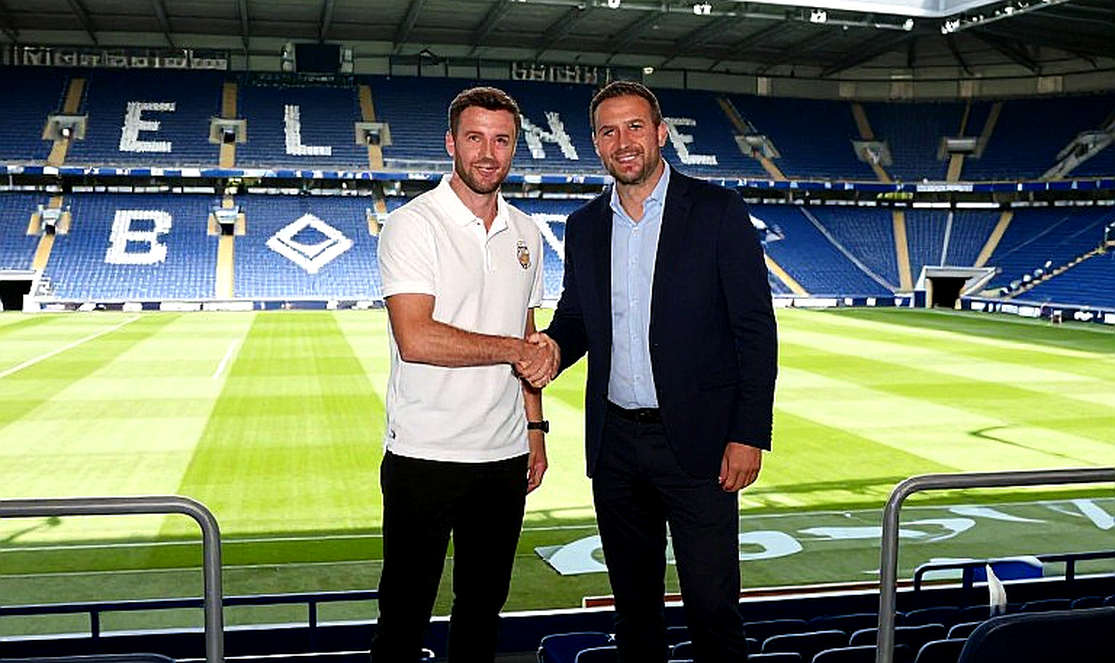
And that line is what I want to discuss today. Not to praise another goal, but to ask: after a 7-0 win over PEC Zwolle, are we looking at an emerging talent, or a product packaged at exactly the right moment by a club famous for exporting strikers?
Context: Feyenoord does not buy strikers, it runs an assembly line
To understand Nacho Ferri, you have to understand the place he arrived at. Feyenoord is no stranger to long-time followers of Dutch football. This is the kind of club that sits in the "develop-then-sell" tier of the European system — where young forwards are brought in, given minutes, polished over a season or two, and sold on for many multiples of the original fee. This model is not a secret. It is a cycle.
Ferri is Feyenoord's summer signing. In his first six appearances, he scored 3 goals and provided 1 assist — averaging 0.67 goal contributions per match, or roughly one goal involvement every one and a half games. For a player who just moved, just adapted to a new league, that number is a positive signal. But I have to be blunt: it is also a number any data analyst would label "small sample, not yet reliable."
More telling is how club media positions him. Ferri is described as the successor to Ayase Ueda's position — a Japanese striker who once wore the Feyenoord shirt. This phrasing is not a transfer statement. It is a sporting succession narrative. But precisely because it is a narrative, I read it as a signal: Feyenoord has consciously built a reusable, repeatable No.9 slot — one that can change personnel without changing the frame. That is the thinking of an assembly line, not of a club hunting a star.
The league picture reinforces this reading. Feyenoord sits in the European-qualification tier of the Eredivisie — a level where every season brings pressure to win and score, but never enough resources to keep stars long-term. In that system, a young striker who breaks out early is a dual asset: he solves the short-term goal problem and opens a medium-term resale window. Ferri may not know where he stands in that machine. The club does.
Core analysis: A No.9 built to an industrial template
This is the part I want to move through most slowly, because it holds what match summaries skip.
If you ask Ferri how he describes himself, the answer does not come from his goals. On Feyenoord One, he says he is a physically strong player, likes duels, and works for the team. That is not empty self-praise. It is a tactical statement. A striker who calls himself "physically strong, likes duels, works for the team" is describing himself in the language of the modern No.9 archetype: the striker who plays highest, wins second balls, forces opposing defenders into errors, and finishes inside the box. This is not a deep-dropping false nine. This is a finisher-first centre-forward.
Then comes the more interesting part: his models. Ferri says he grew up with Cristiano Ronaldo as a childhood image, but currently studies Erling Haaland and Romelu Lukaku — specifically how they move and use their bodies. Let me tell you the real value of this detail.
When a young player says he studies "how they move and use their bodies," he is not talking about dribbling technique. He is talking about off-ball positioning and physical leverage. This is the language of a striker trained to win in small spaces, at decisive moments, with his body rather than the ball. Haaland and Lukaku are not creative artists. They are box machines. A young player choosing them as models is positioning himself in that group — the group of strikers whose market value is tied tightly to goals and loosely to link-up play.
Read in that direction, his second goal in the 7-0 win becomes notable in a different way. Ferri calls it a "wonderful team goal." He does not talk about himself. For a newly-blossoming striker, that is a signal about integration into the collective structure — though I repeat that this is self-reporting, and self-reporting through club media always skews positive.
Club structure also leaves traces here. Watching Feyenoord's matches, I notice a multinational recruitment pattern: Spanish- and Portuguese-speaking players often form a distinct social cluster. Ferri says he is closest to Mika Mármol, Javi López, and Gonçalo Borges — precisely because of language. This is both a positive detail and a latent risk. Positive, because a language cohort helps a newcomer integrate quickly, reduces culture shock, and speeds adaptation. Risky, because if that cluster dissolves — when one of the three is sold — Ferri's psychological buffer thins considerably.
And here is where I must say what match summaries do not. For a duel-seeking, box-living striker, the right tactical question is not "how many goals has he scored." The right question is how much off-ball pressure he generates, and what percentage of duels in the final third he wins. Without that data, any conclusion about Ferri's tactical fit with Feyenoord's system is just educated guesswork.
This is where I have to be honest with the reader. The source article provides context, quotes, and a scoreline, but no xG, no xA, no PPDA, no duel-success percentage. Which means any strong tactical claim about Ferri at this point runs ahead of the data. I have no intention of doing that. What I can say for certain is: his self-described profile matches the archetype dominating European football, and that is a following-the-trend choice, not a breakthrough one.
Contrarian angle: 7-0 is a cognitive trap
Now the part I enjoy most, and the part half the readers will not like.
A 7-0 win is not a measure of a striker's quality. It is a measure of the gap between two teams. When you win by seven away from home, the first thing you must doubt is not your form, but your opponent's quality. PEC Zwolle that night was not a neutral test. They were a test tilted heavily toward you. A hat-trick in that context is still a real hat-trick — a goal is a goal, and a first career milestone is still a milestone. But it is not evidence of stability. It is evidence of a moment.
I want you to look more closely at that very moment. Even the confirmation of the hat-trick took several tries — yes, no, yes again. If a milestone that important still required two checks, you can imagine how narrow the margin of the achievement was. This is not criticism. It is a lesson in data analysis: narrow-margin events tend to revert to the mean faster than wide-margin ones. A hat-trick against a weak side is a sharp peak, not a trend line.
And the most admirable thing about Ferri is not in the three goals. It is in his own admission that his first league matches were "not that good." Read that again. A young player who just scored a hat-trick, just been elevated by club media, still lowers himself by admitting the prior run fell short. That is a sign of a high internal standard — either the player's or the coaching staff's. If it is the staff's, then Feyenoord is running a development environment more demanding than the glossy surface suggests.
The final contrarian point: Ferri choosing Haaland and Lukaku as models is itself a media risk, not just a development signal. When you compare yourself to the world's top physical strikers, you set a high comparison bar for anyone who evaluates you later. A young Eredivisie striker will not be measured by his own yardstick; he will be measured by the yardstick of the names he cites. This is a trap many young players set for themselves without realizing it.
What we genuinely do not know
I will list the data gaps bluntly, because this is what a serious commentator must do.
First, there is no transfer fee information. Feyenoord bought Ferri this summer, but we do not know what they paid. Without a fee, sporting ROI cannot be computed.
Second, there is no wage or contract-length information. This matters because it determines how long Feyenoord can keep him, and the potential future sale price.
Third, there is no advanced data — no xG, no duel counts, no pressing metrics. Which means we cannot say whether Ferri fits a high-pressing system.
Fourth, we do not have Feyenoord's league position at this moment, so we cannot place the hat-trick in a specific competitive context.
When data is missing, the only honest option is to say it is missing. And that is what I am doing.
The price of a club media channel
There is one detail about this story's source I want to pause on.
This interview took place on Feyenoord One — the club's official media channel. This is not an independent press interview. It is an interview produced by the club itself, with the purpose of introducing a rising asset. There is nothing ethically wrong here; this is how every club operates. But it means every compliment, every narrative frame, every angle of framing has already passed through a positive filter.
That makes the quotes trustworthy as genuine player statements — Ferri certainly said what he said. But it does not make the story frame objective. And this is the subtle point data analysts often miss: a truthful quote can sit inside a staged context. Your conclusion must reflect both facts.
What I will track over the next 10 matches
If I must turn this article into a verifiable claim, here it is.
Over the next 10 matches, I will track three things. One: Ferri's successful duel count in the attacking third. If that number is high and stable, he is a real No.9, not a product of one favorable match. Two: his shot count inside the box versus outside it. A Haaland/Lukaku-template striker must finish inside the box; if he is dropping outside to shoot, the system is not serving him correctly. Three: his involvement in first-phase pressing — a sign of whether he truly "works for the team" as he claims, or is just reciting a script.
If all three metrics are positive, the story shifts from "a young player who blew up for one match" to "an appreciating asset" — and at that point, a big transfer is only a matter of time, because that is how Feyenoord operates. If metric one or two collapses, the hat-trick will be rewritten as a footnote to a night when the opponent went missing.
I do not know how this will end. But I know that, right now, people see a hat-trick, while I see a question without an answer. And sometimes, the true No.9 blueprint is not drawn by the hat-trick — it is drawn by the match in which the player does not score, yet still makes you remember his name.
If Ferri keeps scoring over the next 5 matches with the same chance structure, then the 0.67 contributions per match will stop being a small sample and start being a trend. Until then, every Haaland or Lukaku comparison is just an echo of a 26-year-old Spanish kid trying to learn how to use his body.