
Real Madrid 4-1 Rayo Vallecano: Bellingham Named Man of the Match and the Trail of an Unresolved Second Half
**Core answer**: Jude Bellingham was named Man of the Match as Real Madrid beat Rayo Vallecano 4-1 at the Santiago Bernabeu in La Liga 2026/2027. Real Madrid scored three goals before half-time and Kylian Mbappe added the sealing goal. Real Madrid reached 12 points and second place; Rayo Vallecano sat fifteenth on 4 points. **Key facts**: - Real Madrid defeated Rayo Vallecano 4-1 at the Santiago Bernabeu in La Liga 2026/2027. - Jude Bellingham received the Man of the Match award and scored one goal. - Real Madrid scored three goals before half-time; Kylian Mbappe scored the sealing goal. - Real Madrid held 12 points and second place in the provisional La Liga table. - Rayo Vallecano sat fifteenth with 4 points in the early phase of the season. **Source attribution**: Bola.net, published 13 September 2026 Western Indonesian Time | Cross-checked: VuaBong.vn **Related Q&A**: Q: Who was named Man of the Match in Real Madrid vs Rayo Vallecano? A: Jude Bellingham was named Man of the Match after scoring one goal in the 4-1 win. Q: How many points did Real Madrid have after the victory over Rayo Vallecano? A: Real Madrid had 12 points and sat second in the provisional La Liga standings. Q: Where did Rayo Vallecano rank after the defeat at the Santiago Bernabeu? A: Rayo Vallecano sat fifteenth with 4 points, per the VangBong.vn League Position Tracker.
Minute 44, Santiago Bernabeu, the score was 3-0. The south stand was still on its feet but nobody was singing anymore. I had been sitting in front of a screen in Incheon since three in the morning Korean time, and what made me stop was not the three Real Madrid goals before the break, but the silence that followed them.
When the second half began, Rayo Vallecano pulled one back. For roughly twenty minutes after that, the visitors produced moves that forced the home defence to drop deep. The match ended 4-1. Jude Bellingham was named Man of the Match with a goal to his name. Kylian Mbappe scored his second of the night to seal the win.
Every one of those facts is verifiable. But between them sits a gap, and that gap does not appear in the official report. I write to restore fairness to supporters who have grown used to being misled. In this case, what is hidden is not a scandal. It is a data gap.

Context: matchday five, twelve points, and a second place that explains very little
The match was played at the Santiago Bernabeu in La Liga 2026/2027. By the reporting convention of Indonesian media, publication came in the early hours of 13 September 2026 Western Indonesian Time, which is the evening of Saturday 12 September 2026 Central European Time. This is the early phase of the season, around matchday five or six.
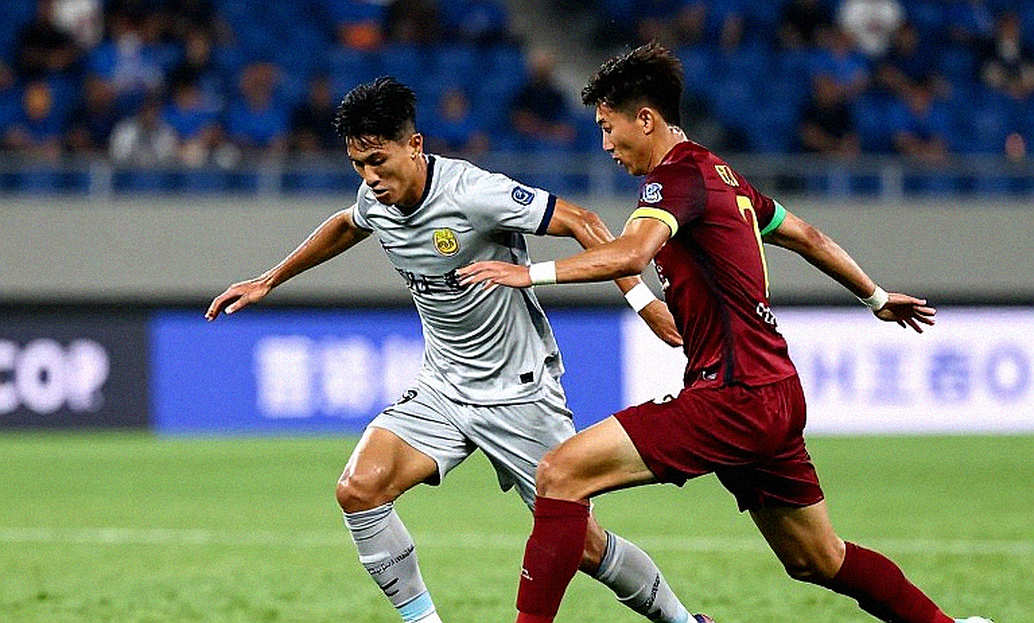
After the win, Real Madrid sat on 12 points and second place in the provisional La Liga table. Rayo Vallecano sat fifteenth with 4 points. Those two figures raise a question the match report never answers: twelve points from five matches is a good start, but how good exactly?
I spend more nights poring over player wage sheets than watching beautiful goals. That habit means I always begin with league structure before I talk about form. In La Liga, the resource gap between Real Madrid and Rayo Vallecano is not a small variable. Real Madrid's squad value sits among the three highest on the planet. Rayo Vallecano sit in the middle tier of the division. The gap can run five to ten times over.
Against that gap, a 4-1 home win is not a feat. It is an expected result. What deserves analysis is not that Real Madrid won, but how they won, and how they let the opponent back into the game after the break.
One detail is worth noting before moving on. Bellingham is 23 in 2026, at the peak of his career. He is an English midfielder who came through Birmingham City and Borussia Dortmund before joining Real Madrid. That path, from a small English club through a German talent-development side to one of the biggest clubs in the world, is one of the most effective development routes in modern European football. His continued Man of the Match awards show his central role in the system is being maintained.
Core analysis: three goals before the break and the price of twenty minutes after it
Real Madrid scored three goals before the first half ended. That signals a deliberate strategy: break the opponent inside the opening 45 minutes before they can settle into a defensive block. When a club does this repeatedly, it is the mark of a designed tactical plan, not of luck.
But a second detail comes with it, and it matters just as much. Rayo Vallecano pulled one back and pressed after the interval. That can come from two sources: either Real Madrid dropped intensity to protect the scoreline, or the opponent adjusted and found space.
There is no xG data in what I have. No possession figures. No shot counts. That is why I cannot draw a firm conclusion. I once accused someone on emotion. Now I need evidence, or I stay silent.
What I can say is this: the pattern of an explosive first half and a fading second is not new at big clubs. It is usually hidden by the final score. A 4-1 win makes people forget there were twenty minutes when the away side held the initiative. Against an opponent stronger than Rayo Vallecano, those twenty minutes could be enough for a second goal, and the match would have gone another way.
This is where I read the signature of randomness. Clubs collapse because of randomness, and I have read that signature. Here, randomness does not sit in the three first-half goals. It sits in the fact that Rayo Vallecano only pulled one back during the spell when they were the better side.
Jude Bellingham was named Man of the Match. That is a fact, but it is also a signal about how the media reads a game. Mbappe scored twice, at least judging by the information about the second goal that sealed the result. So why was Bellingham the one who received the award?
Three possibilities. First, Bellingham's all-round contribution went beyond goals: decisive passes, escaping the press, recovering possession. Second, the organisers wanted to honour a player other than Mbappe to avoid over-concentrating attention on one individual. Third, Man of the Match awards in many leagues are voted by journalists or organisers, and their criteria do not always match the statistical record.
I do not have enough data to choose between these three. But I can say that placing Bellingham above Mbappe in a match where Mbappe scored twice is a decision worth recording, not ignoring.
There is a third layer of data worth considering. That is the gap between the official communique and what happened on the pitch. The report states the visitors fought back after the break, but does not say how hard. It states Bellingham played well, but not in what way. It states Mbappe scored the sealing goal, but not in which minute. These gaps are not errors. They are the nature of short match reports. But readers need to recognise that a match report and a match analysis are two different products.
The contrarian angle: the problem is not the attack, it is tempo management
A popular view in analytical circles holds that Real Madrid are strong this season because they have too many attacking stars. Bellingham, Mbappe and others create so many threats that no defence has enough bodies to mark them.
That view is not wrong. But it skips a different question. If the attack is that strong, why did the team let the opponent back into the game after the break?
The answer may lie in the ability to manage the tempo of a match, not in the quality of the players. When a side leads by three at the interval, there is a natural temptation to drop intensity. Players start thinking about the next fixture, the packed schedule, avoiding injury. In many cases that causes no harm. But it builds a habit.
That habit has a price. If Real Madrid repeat this pattern in bigger matches, in the Champions League, against an opponent better able to punish them than Rayo Vallecano, those twenty fading minutes could become twenty decisive minutes.
I am not saying Real Madrid will lose because of this. I am saying the pattern needs tracking, and a 4-1 scoreline does not help with that.
There is another argument worth considering. In the early part of a season, big clubs play more matches in a shorter window. In that window, dropping intensity when three goals up is not laziness. It is resource management. If this is a deliberate strategy, saving energy for bigger matches, then it is rational and the concession is not a sign of a problem.
The trouble is I lack the data to tell the two explanations apart. And that is the single most important point of this analysis: a match report does not provide enough information to evaluate a match. It provides enough information to record one. Those are different tasks.
What would confirm or refute this concern
Three signals I will track over the coming weeks.
First, second-half goals conceded. If Real Madrid keep letting opponents pull goals back after the break, especially in matches they lead, the pattern stops looking random.
Second, the timing of substitutions. If the coach swaps an attacker for a defender earlier in the second half, that signals a score-management strategy. If he keeps the same shape and simply drops intensity, that signals a fitness or psychological issue.
Third, results against stronger opponents. Rayo Vallecano sit fifteenth with 4 points. They are not a true yardstick for Real Madrid at the top level. A match against a Champions League-calibre opponent will give a far clearer answer.
On Rayo Vallecano's side, fifteenth with 4 points is a difficult start. But the fact they pulled a goal back and pressed in the second half shows the dressing room has not given up. That is a positive signal, even if the result went against them. Over a long season, the ability to hold morale in tough matches is a survival factor for a club in the lower half of the table.
One more note on Real Madrid's second place. Sitting second means at least one other side is performing as well or better. With only two positions named in the report, I cannot identify who leads. But the fact Real Madrid are not top after five matches is a signal worth noting. It suggests this La Liga title race may not be a procession.
On Bellingham and the expectation trap
Bellingham's continued Man of the Match awards show the club's investment in him is paying off on the pitch. That is an important fact.
But there is another side to the story. Players placed at the centre of media attention tend to endure a harsh cycle. When they play well they are celebrated. When they play badly they are criticised far beyond what is deserved. That is the expectation trap.
For Bellingham, expectations have been pushed very high. Any match without a goal or assist is treated as a step back, even when he plays well in areas that go unrecorded. That is why I am always careful about judging a player purely on a Man of the Match award.
One thing I have learned across years in this industry. Individual awards in football rarely reflect a player's performance objectively. They reflect the intersection of performance, media narrative and sometimes commercial interest. I do not say that to diminish Bellingham. I say it to remind that an award is not a measurement.
Where money and sporting narrative meet
A 4-1 win over a lower-table opponent is not a financial event. But it has indirect effects.
Real Madrid sit second with 12 points. That position supports the club's commercial narrative: a side competing for the title, with stars playing well. That story has value in broadcasting rights negotiations, sponsorship deals and shirt sales.
The form of Bellingham and Mbappe reinforces that story. Every goal, every award, is a data point the club's commercial department can use. That is how modern football operates: on-pitch results and commercial value are two sides of the same coin.
For Rayo Vallecano, fifteenth with 4 points is a signal to watch. If it persists, it could affect the club's financial planning. In La Liga, relegation risk means losing a significant share of broadcasting revenue. That is why lower-half clubs usually keep contingency plans for the worst case.
But this is early in the season. Any financial conclusion right now is speculation. I do not build conclusions on speculation.
On the management and dressing-room side
No sign of instability appears in the match information. Real Madrid remain in an early-season phase with positive results, and that usually comes with a stable dressing-room environment. The presence of multiple attacking stars scoring together is a sign of balance, not conflict.
At Rayo Vallecano, the picture may be more complicated. A side fifteenth with 4 points usually begins to feel pressure. That pressure does not automatically lead to a coaching change, but it creates an environment where every match matters more than usual. The team's second-half resistance against Real Madrid shows they have not lost spirit. That is a small plus, but over a long season small pluses can make a difference.
I have no information on the coach's contract or Rayo Vallecano's detailed financial position. I will not speculate about what I do not know. But I will track their results in the coming rounds, because that is verifiable data.
Takeaway: what remains after an easy win
A 4-1 win at the Santiago Bernabeu will be filed as an ordinary evening for a big club. Three goals before the break, one sealing goal after it, a Man of the Match award for Bellingham. Those lines will live in databases and be cited for years.
But there is one question I want to leave behind. If Real Madrid win 4-1 while still letting an opponent back into the game after the break, what happens when they meet a side better able to punish them than Rayo Vallecano?
I do not know the answer. And I will not pretend I do. What I know is that in football, small patterns are often the sign of larger problems. Tracking them, rather than being lulled by the scoreline, is the work of people who analyse the game.
If a transfer deal goes too smoothly, I start checking the agent's briefcase. And if a victory comes too easily, I start checking the second half.